
 330.252.8188
 Uniontown, OH
 330.252.8188
 Uniontown, OH



Engaging activities play a critical role in enriching the lives of seniors living with dementia. At The Gables of Green, families often look for meaningful ways to connect with their loved ones—ways that spark joy, comfort, and cognitive stimulation. Carefully selected games to play for dementia patients can offer immense emotional support, encourage memory recall, and strengthen relationships.
From early to late stages, the right activities can transform daily life by offering structure, comfort, and moments of happiness. Whether you’re searching for simple games for dementia patients, exploring interactive games for dementia patients, or hoping to incorporate more physical games, understanding each stage helps you choose activities that truly make a difference.
Benefits of Engaging Games for Dementia Patients
Engaging, well-chosen activities can drastically improve the emotional and cognitive well-being of individuals with dementia. These games to play for dementia patients go beyond entertainment—they stimulate memory pathways, enhance social interaction, and create a sense of routine and purpose. Activities such as puzzles, matching games, or guided storytelling can feel comforting and familiar, helping residents feel more connected to their identity.
Games also promote emotional expression. A familiar tune or picture may evoke cherished memories, sparking meaningful conversations and deepening empathy between caregivers and loved ones. These activities support a more personalized care experience, enabling seniors to engage in ways that feel natural and enjoyable.
At The Gables of Green, compassionate memory care keeps emotional comfort first—weaving life-enrichment activities like music, art, and reminiscence therapy into daily routines for residents. To further understand dementia’s impact, families may find guidance from trusted sources like the Alzheimer’s Association’s resources on dementia care.

Cognitive Games for Early-Stage Dementia
Supporting Concentration and Memory
In the early stages of dementia, individuals often benefit from games that strengthen memory, concentration, and problem-solving skills. Cognitive activities can be both uplifting and highly effective for maintaining mental acuity. Simple word challenges, card matching, or puzzle-based tasks can activate recall while fostering enjoyable moments with family and friends.
Activities such as word scrambles or number-based puzzles offer gentle mental workouts. These simple games for dementia patients can boost confidence, encourage conversations, and reignite interests that feel familiar and comforting. For example, working on a jigsaw puzzle of a favorite landscape or memory-rich image offers subtle cognitive support while instilling pride and accomplishment.
Each activity should align with the person’s personal interests and abilities. Pairing engaging activities with personalized memory care plans at The Gables of Green helps residents stay connected at their own pace while maintaining as much independence and dignity as possible. Families looking for free printable puzzles can visit the National Institute on Aging’s selection of activities.
Interactive Activities for Middle-Stage Dementia
Encouraging Emotional Connection and Focus
As dementia progresses into the middle stage, social engagement becomes essential. Interactive and creative tasks can help maintain conversation, strengthen emotional connections, and provide moments of shared joy.
Storytelling games—one of the best interactive games for dementia patients—allow seniors to reminisce about childhood memories, family traditions, or significant life events. Creative scrapbooking, guided memory books, or themed conversations can help anchor long-term memories while encouraging bonding.
Simple card games, picture recognition challenges, and sorting tasks also offer effective cognitive stimulation. These activities are easy to adapt and can be modified for different levels of focus and mental ability. By incorporating familiar themes, such as family photos or seasonal items, seniors often show improved engagement and enthusiasm.
The Gables of Green supports these moments through engaging activities that prioritize purposeful connection and social interaction. For more techniques on middle-stage engagement, the Dementia Australia site offers excellent insights.
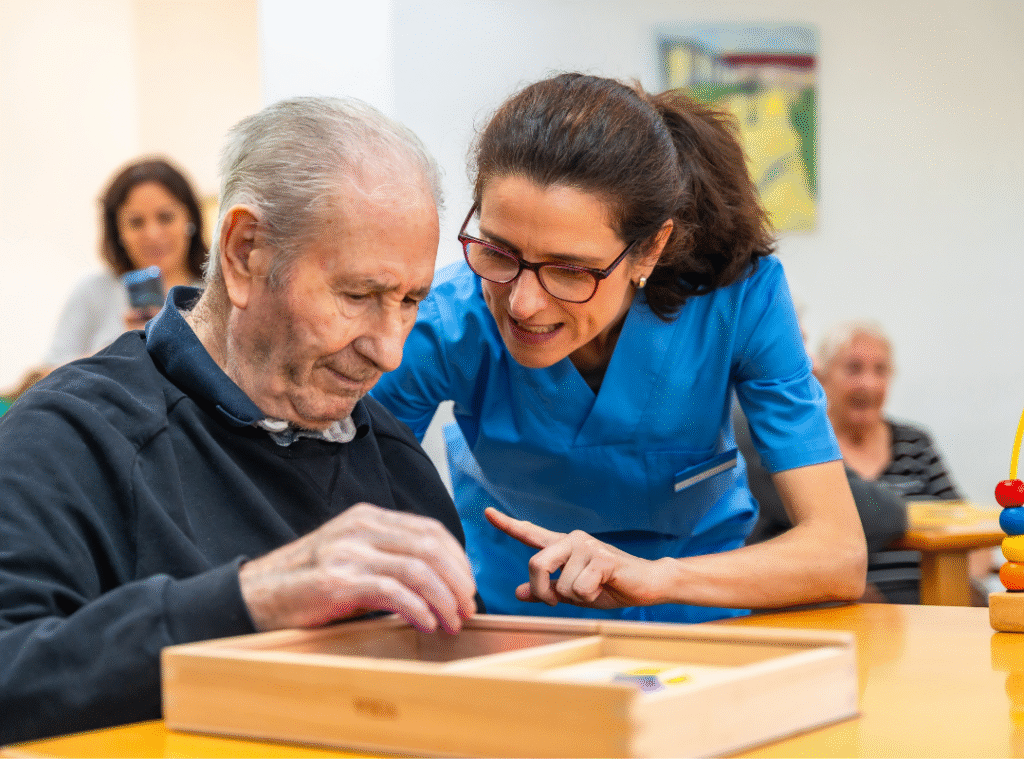
Sensory Engagement for Late-Stage Dementia
Supporting Comfort, Movement, and Emotional Memory
In the later stages, sensory activities become deeply meaningful and therapeutic. Touch, sound, and gentle movement can activate emotional memories even when verbal communication becomes challenging.
Tactile activities—such as handling soft fabrics, textured objects, or familiar household items—offer comfort and sensory stimulation without overwhelming the individual. These activities also serve as simple games for dementia patients who may no longer engage with puzzle or word-based tasks.
Movement-based tasks like balloon tapping, scarf dancing, or guided stretching serve as enjoyable physical games for dementia patients that help improve circulation and mobility. Even gentle group singing or rhythmic clapping can create emotional harmony and connection.
By tailoring activities to the resident’s sensory preferences, you ensure they remain involved, valued, and emotionally supported. The Gables of Green offers memory care services that help maintain comfort, safety, and quality of life throughout all stages of dementia.
Tips for Choosing the Right Games
The key to selecting effective games to play for dementia patients lies in understanding their current cognitive stage, personal preferences, and emotional needs.
Here are essential tips to guide your choices:
- Match games to ability level — Early-stage seniors may enjoy puzzles, while later-stage individuals respond best to sensory activities.
- Prioritize familiar themes — Nostalgic images, music, or topics evoke positive emotions and foster connection.
- Encourage social play — Group games or paired activities reduce loneliness and support emotional bonding.
- Adapt based on response — If frustration or fatigue appears, gently shift to another activity.
Families can also explore free online games for dementia patients, including printable memory cards and reminiscence prompts. Helpful resources for seniors include guidance and reliable tools, such as AARP’s activity suggestions.
Ready to Bring Joy and Comfort to Your Loved One?
Incorporating the right activities into your loved one’s daily life can improve cognition, support emotional well-being, and create memorable moments. These games to play for dementia patients, whether cognitive, interactive, sensory, or movement-based, can inspire joy and strengthen the bonds that matter most.
If you’re ready to discover how The Gables of Green can support your loved one through purposeful engagement and compassionate care, call us today at 330-252-8188 or schedule a tour. Our team is here to help your family feel supported every step of the way.
Frequently Asked Questions
What games are good for dementia patients?
Games that support memory, focus, and gentle problem-solving are ideal for dementia patients. Simple puzzles, matching games, and word-association activities help stimulate cognitive function without causing frustration. Familiar board games with easy rules, such as dominoes or Bingo, also encourage social interaction. Sensory-based games, like sorting objects by color or texture, can be calming and engaging for individuals in later stages.
What is the 20 Questions game for dementia patients?
The 20 Questions game for dementia patients is a simplified version of the classic guessing game. One person thinks of an object, and the patient asks yes-or-no questions to figure out what it is, encouraging communication and logical thinking. For dementia care, the objects are usually familiar, such as household items, animals, or foods. The game promotes engagement, reduces anxiety, and helps maintain verbal skills in a fun, low-pressure way.
What activities are good for dementia patients?
Structured, familiar, and sensory-based activities work best for dementia patients. Arts and crafts, folding laundry, listening to music, or gardening can provide comfort and a sense of purpose. Physical activities like chair exercises or short walks support mobility and mood. Keeping tasks simple and achievable helps boost confidence while reducing frustration.
How to keep a person with dementia in bed?
Keeping a dementia patient in bed safely involves creating a calming, consistent nighttime routine. Reduce noise, dim lights, and avoid stimulating activities before bed to promote relaxation. Ensure the room feels familiar—using soft bedding, nightlights, or personal items can help reduce confusion. If wandering persists, consider safety measures such as bed alarms or motion sensors, or consult a healthcare provider for behavioral strategies.